
Bathroom fall detection
Bathroom fall detection for elderly parents.
No camera. Nothing to wear.
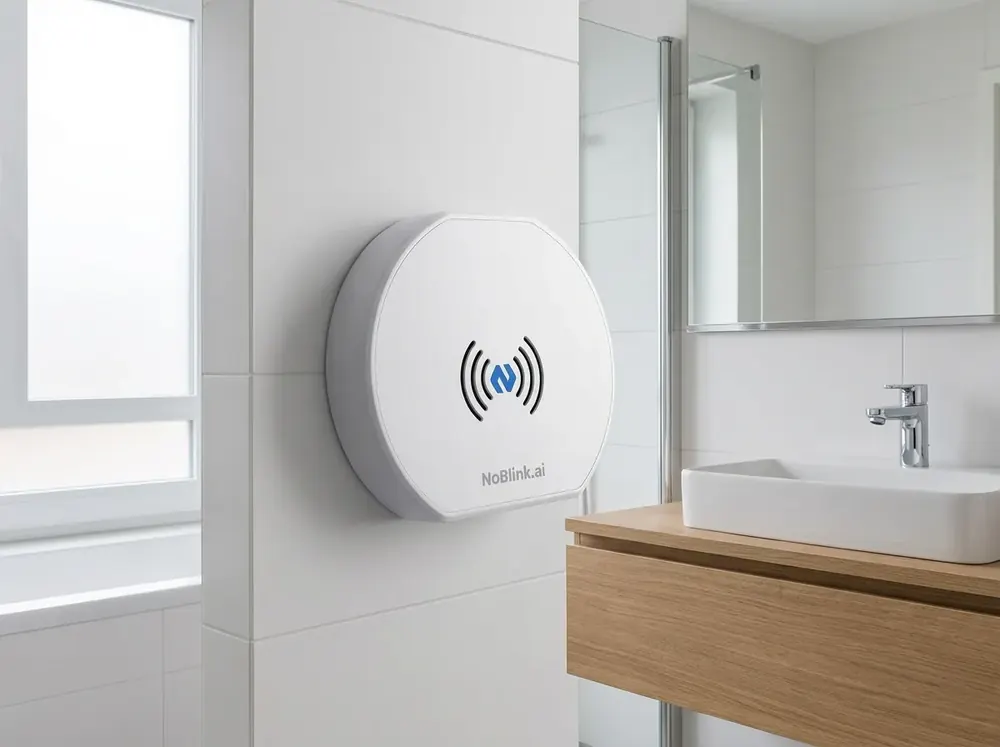
The bathroom is where floors get wet, where people stand up quickly, and where watches and pendants come off. NoBlink’s bathroom sensor keeps watch without a camera, works through steam and in the dark, and calls family if a fall happens.
Why the bathroom needs its own sensor
In a large US study of bathroom injuries treated in emergency departments, falls caused 81% of them, two in three happened in the bath or shower area, and injury rates climbed steeply with age. Indian bathrooms add their own risks: bucket baths on a low stool, floors that stay wet, and squat toilets that ask a lot of ageing knees.
Wet, smooth floors
Water and soap on tiles turn a normal step into a slip, especially getting out of the shower area.
The watch comes off
Most people take off a watch or pendant to bathe. That leaves the riskiest room with no protection at all.
A closed door
Bathroom doors are shut and often locked. If someone goes down quietly, nobody in the house may hear.
Night-time trips
Getting up in the dark, still half asleep, is a common time for a fall on the way to or in the bathroom.
Source: Stevens, Haas and Haileyesus, Nonfatal bathroom injuries among persons aged 15 and over, MMWR 2011.

How the bathroom sensor works
- Radar, not a camera. It reads movement and position from reflected radio waves. It never forms an image, so the bathroom stays completely private.
- Unaffected by steam or darkness. A hot shower, a fogged mirror or the lights being off make no difference to radar.
- Out of the way. Our installer mounts it high on the wall, usually in a corner, running from a nearby power point and your home Wi-Fi.
- Watches for stillness too. Someone who feels faint may sit or slide down quietly. A long, unusual stillness can raise an alert even without a hard fall.
If there is a fall, family hears about it at once
NoBlink places automatic voice calls to the people you have chosen and sends an alert on the NoBlink app. If the first person does not answer, it escalates to the next contact on your list. Nobody has to find a phone or a button while lying on a wet floor.
Installed by our team in Bangalore, Chennai, Mumbai, Pune and Gurugram. See how NoBlink fall detection works
A few changes that make the bathroom safer
Detection matters, and so does prevention. These are simple fixes most homes can make in a weekend.
- Grab bars beside the toilet and in the shower area, fixed into the wall, not suction cups.
- Anti-skid tiles or a rubber mat where people stand to bathe, and a dry mat outside.
- A sturdy bath stool with rubber feet instead of a low plastic one that tips.
- A western toilet, or a raised seat or commode chair over a squat toilet.
- A small night light on the route from the bed to the bathroom.
- A door lock that can be opened from outside, or no lock at all.
Common questions
Can the bathroom sensor see my parent?
No. There is no camera in it. The sensor uses radar, which picks up movement and position but never forms an image of a face or body. That is exactly why it can go in the bathroom.
Does it work while the shower is running?
Yes. Radar is not affected by steam, fog on the mirror, or the lights being off, so the sensor keeps working during a hot shower and in the middle of the night.
Where is the sensor fitted?
Our installer mounts it high on the wall, usually in a corner, so it can see the whole room and stays out of the way. It runs from a nearby power point and connects to your home Wi-Fi.
What if my parent stays in the bathroom too long without falling?
A long, unusual stillness can also trigger an alert. That matters because a person who feels faint may sit or slide down quietly rather than fall hard.
Do we need a sensor in every bathroom?
We usually start with the bathroom your parent uses most, especially the one they use at night. On the call we look at the layout of the home and suggest what makes sense.
Make the riskiest room
the safest one.
Tell us about the bathroom your parent uses and we will suggest where the sensor should go.